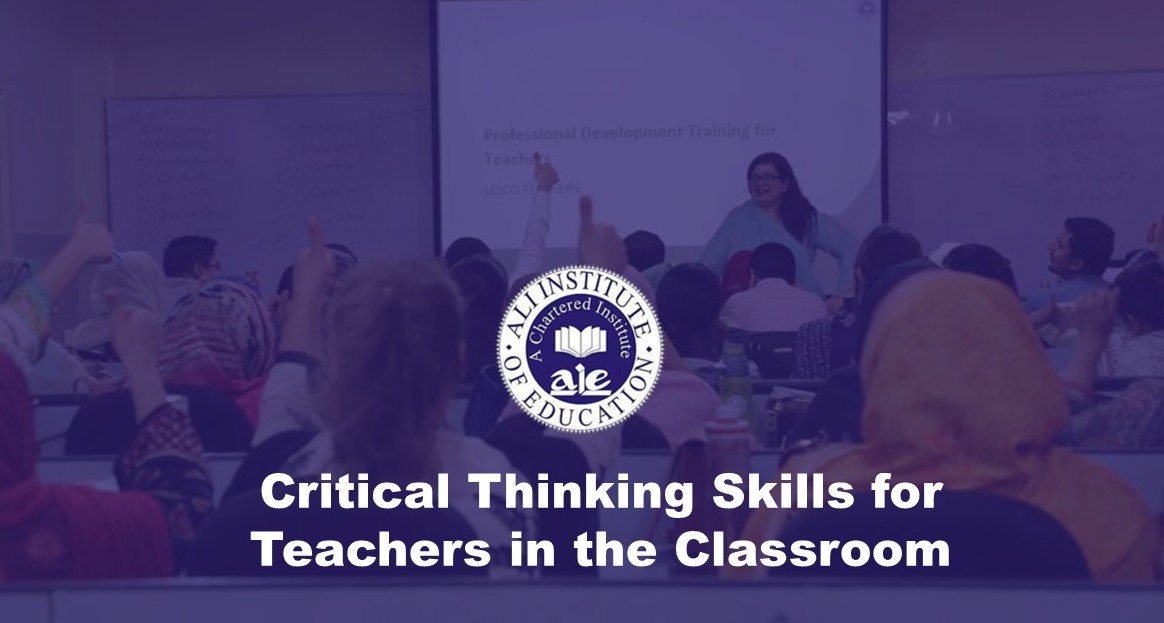
The role of a teacher is no longer restricted to simply passing information from books. Today’s classrooms require teachers who can assess circumstances, modify teaching methods and lead students to think for themselves.
This is where critical thinking skills come into play. Critical thinking teachers design relevant student learning experiences and help students prepare for future life challenges.
What Is Critical Thinking in Teaching?
Before discussing the implications, let’s understand what critical thinking in teaching is. Critical thinking is the ability to think about something in an objective and rational way, evaluating information from all sides before reaching a decision.
For educators, critical thinking is more than just problem-solving. It involves thinking about various teaching approaches, getting to know the students and modifying instruction in response to the learning. In other words, it is not about unquestioning routine; it is about making considered and informed choices.
Critical Thinking Examples That Occur in the Classroom
Here are a few real-life examples of critical thinking to show how it’s done in practice:
- Adapting a lesson when students aren’t understanding the concept
- Sifting through test results to see where students lack understanding
- Selecting an approach for mixed-ability classes
- Peace and fair judgment of disputes
Each instance shows that careful reflection results in improved teaching performance.
The Role of Teacher Training in Critical Thinking
Professional development is an important factor not only for improving educators’ system-thinking skills. Teacher training programmes have structures that teach teachers contemporary teaching modes, classroom research and reflective practice.
Effective teacher preparation programs help teachers in developing analytical thinking skills, enhancing decision-making and maintaining pace with the contemporary education standards. This type of training pushes teachers to realise that effective, student-centred pedagogical approaches are superior.
Learning from Critical Thinking Books
Teachers also have an opportunity for professional development when they read books about critical thinking. These are practical guidelines with case studies and research-based strategies that teachers can actually use in their classrooms. Lifelong learning keeps teachers reflective, informed and nimble.
Why Are Teaching Critical Thinking Skills Important?
Classrooms are also fluid, and no two situations are ever the same. Effective critical thinking also allows teachers to have a better response towards changing learning styles, new classroom changes, and curriculum development.
Educators critically think when they:
- Improve instructional quality
- Make better classroom decisions
- Foster deeper student understanding
- Encourage curiosity and independent thought
These advantages are directly related to student achievement and motivation.
Qualities of a Critical Thinker in Teaching
With a knowledge of critical thinking characteristics, they are better able to answer these questions and reflect on their own strengths as critical thinkers. The critical thinking traits are:
- Open-mindedness toward new ideas
- Logical and analytical reasoning
- Willingness to reflect on feedback
- Flexibility in teaching approaches
- Strong problem-solving ability
These critical pedagogical instincts keep them worthwhile even in the most challenging classroom.
Approaches To Critical Thinking That Teachers Use
Here are a few critical thinking methods to be used every day in the classroom:
Reflective Teaching
Looking back at lessons allows educators to identify what worked and what didn’t. This leads to continuous improvement.
Question-Based Learning
Open questions prompt teachers and students to think more deeply.
Evidence-Based Decision Making
The use of data, observation and assessment enables teachers to make decisions based on knowledge.
Collaborative Discussion
Teachers benefit from working with peers to see problems through different lenses.
Critical Thinking Skills in an Effective Lesson Plan
Critical thinking does have an effect on the way we plan lessons. In reflection, instructors must take into account objectives, student skills, time limitations, and evaluation format.
By thinking critically, teachers can:
- Design flexible lesson plans
- Select appropriate teaching materials
- Anticipate learning challenges
- Modify pace in reaction to student learning
This considerate method results in a greater (fun, action-packed, and more effective) class.
Encouraging Critical Thinking in Students
When educators apply critical thinking in their instructional practices, they serve as role models, encouraging students to develop lifelong manners of speaking and thought. Educators model, think out loud, and demonstrate problem-solving skills or metacognition to activate this in students.
Some effective strategies include:
- Encouraging class discussions
- Promoting inquiry-based learning
- Using real-world scenarios
- Enable students to explain themselves
And such methods instill a sense of independent thinking in learners taking it beyond the four walls of a classroom.
Conclusion
The days of expecting hard-working teachers to be able to manage without critical thinking skills are essentially over in today’s education system. From planning lessons to managing classrooms, critical thinking allows educators to make informed decisions, overcome challenges, and motivate students.
Teachers who develop these skills and pursue opportunities for professional learning have the power to establish classrooms that are conducive to growth and understanding.
Frequently Asked Questions (FAQs)
How do ‘critical thinking skills improve classroom teaching?
They help teachers in understanding student needs, adjusting teaching methods and devising more appealing lessons.
What are some elements of critical thinking for teachers?
Thoughtfulness, reasoning, analysis, reflection, open-mindedness, and evidence-based decision-making are the main elements of critical thinking for teachers.
How to teach critical thinking skills?
With continuous learning and collaboration, teachers can develop the skill of critical thinking.
How critical thinking help educators with lesson planning?
They enable teachers to plan open, learner-centred lessons and to predict areas of difficulty in learning.
Is critical thinking a tool for enhancing classroom management?
Yes, it helps teachers thoughtfully respond to behavioural problems and establish a positive learning environment.
In what ways do teachers promote critical thinking to students?
By asking good, relevant questions, explaining why things are a certain way, and give an environment for discussion.
How can teachers inspire critical thinking in the classroom?
Inquiry-based learning, open-ended questioning, discussions, and problem-solving in real-life situations.
How does critical thinking support problem-solving in teaching?
It helps teachers identify problems, analyse options, and approach solutions effectively.